Forest Fire
Whether a fire crosses the forest depends sharply on how densely the trees are packed.
Introduction
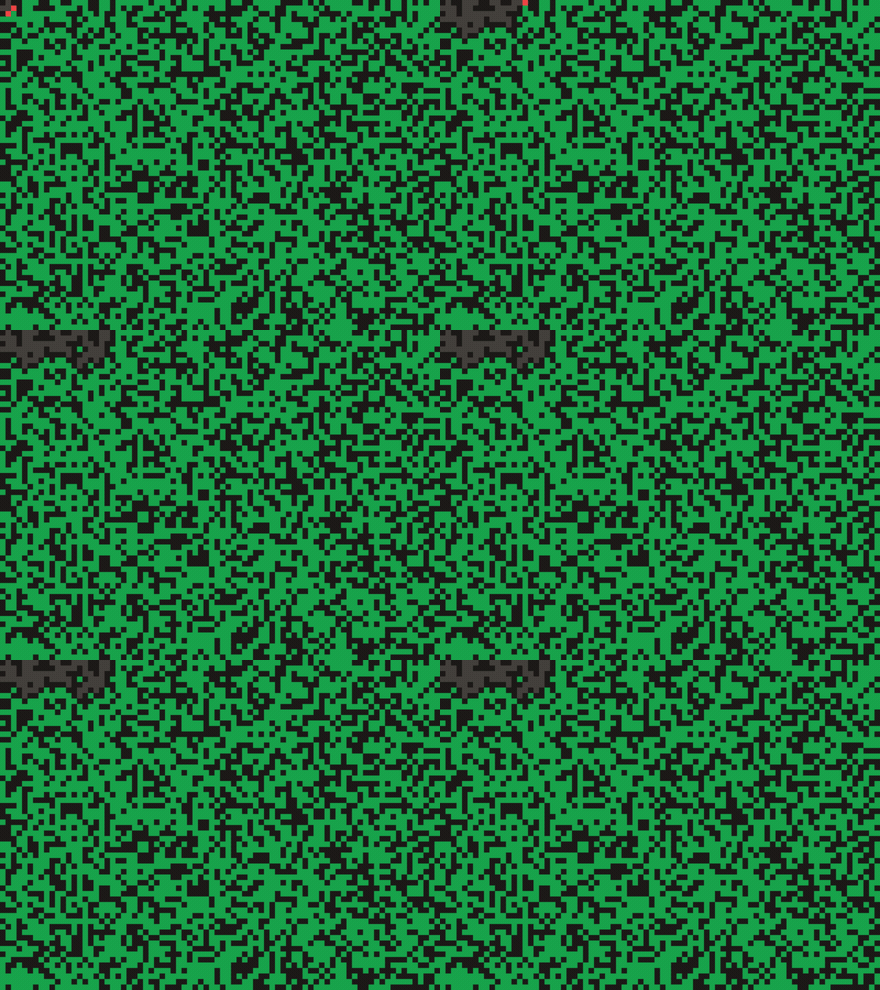
Trees are scattered on a grid at a chosen density and a fire is lit down one edge. Fire spreads only to directly adjacent trees. Below a critical density the blaze fizzles out; above it, fire reaches the far side. The jump between the two happens over a tiny change in density.
Background
The model is a lattice version of percolation theory, introduced by Broadbent and Hammersley in 1957 to study how a fluid spreads through a random medium. The sharp threshold, near 0.59 for an adjacent-neighbour square lattice, is a classic example of a phase transition.
How it works
- At setup, fill each cell with a tree at probability 'density', and ignite the trees in the first column.
- Each tick, a burning tree sets its unburnt tree neighbours alight.
- A burning tree then turns to ash and cannot reignite.
- The fire stops when no burning trees remain; whether it reached the far edge depends on the density.
Parameters
density- Fraction of cells that start as trees. Near 0.59 the system flips from fires that die out to fires that span the whole grid.
Open this model in the editor →