Termites
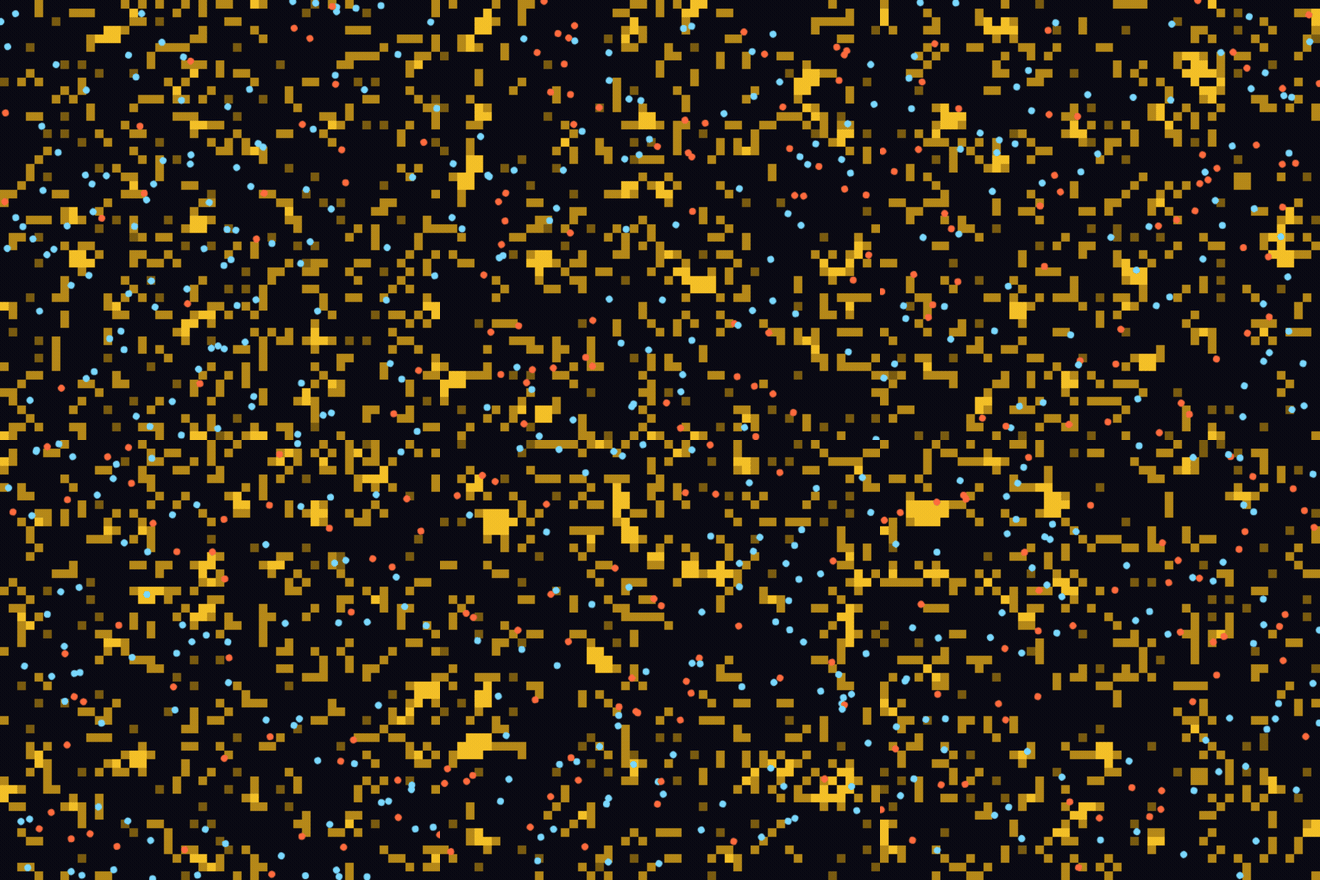
Blind termites following one pick-up-and-drop rule gather scattered chips into neat piles.
Introduction
Each termite wanders at random. Empty-handed, it picks up any wood chip it bumps into; carrying a chip, it drops it when it bumps into another. No termite counts chips, plans, or compares pile sizes, yet the scattered chips slowly collect into a few growing heaps.
Background
Mitchel Resnick popularised the termite model in his 1994 book Turtles, Termites, and Traffic Jams as a companion to ant foraging, both examples of decentralised, stigmergic organisation. It shows that gathering material into piles needs no blueprint and no leader, only a local pick-up and drop rule plus positive feedback.
Resnick, M. (1994). Turtles, Termites, and Traffic Jams: Explorations in Massively Parallel Microworlds. MIT Press.
How it works
- Each termite takes a random step.
- If it is empty-handed and lands on a wood chip, it picks the chip up.
- If it is carrying a chip and lands beside another chip, it drops its chip on a free neighbouring cell.
- Otherwise it keeps wandering; over many steps the chips accumulate into fewer, larger piles.
Parameters
termite_count- How many termites roam the world. More termites sort the chips faster.
wood_density- Fraction of cells seeded with a wood chip at setup, the raw material for the piles.
cooldown_steps- How long a termite must wander after dropping before it can pick up again, so it does not instantly re-lift the chip it just placed.
Open this model in the editor →